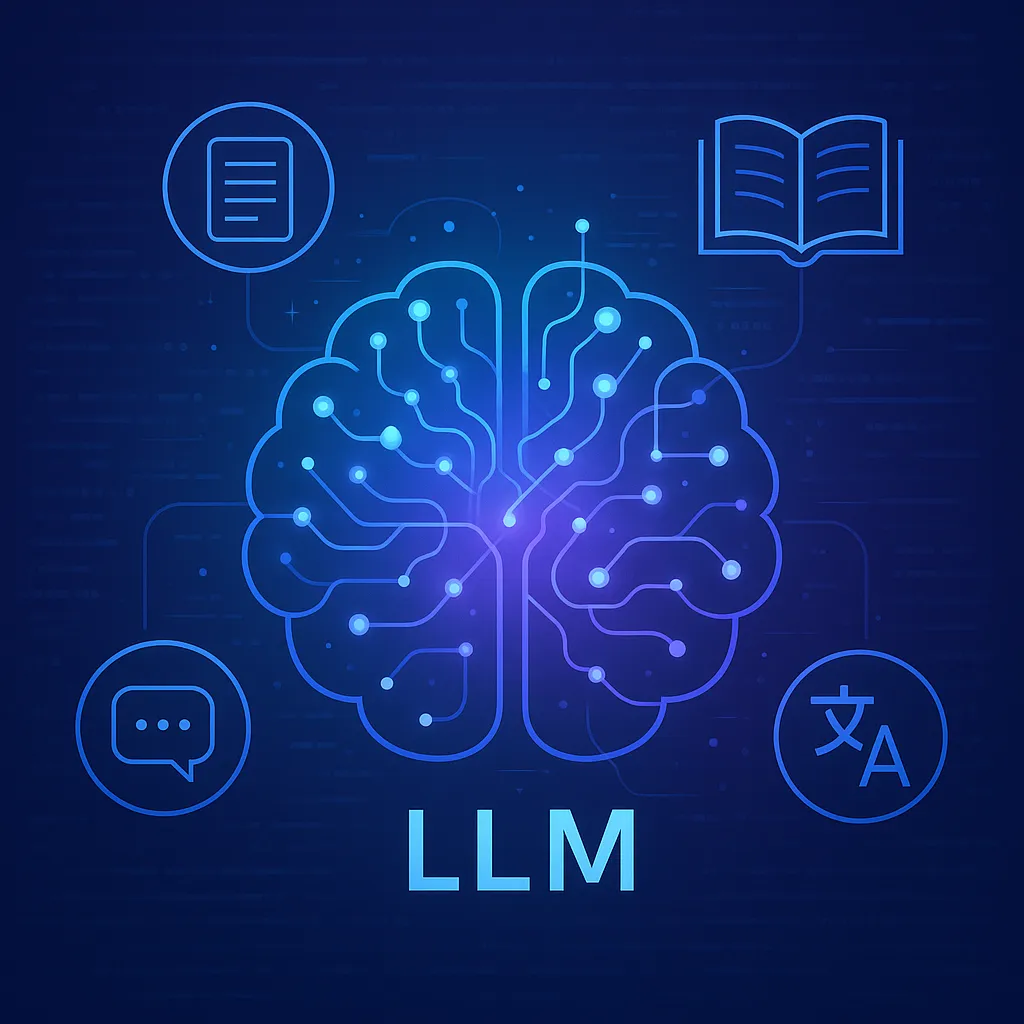
AI Agents for Business: Operations Guide 2026
Learn how AI agents are revolutionizing business operations. From customer service to sales automation, discover practical applications and implementation strategies for your company.
AI Agents: The Next Evolution Beyond Chatbots
If 2024 was the year of chatbots, 2026 is the year of AI agents.
The difference isn’t subtle. Chatbots answer questions. AI agents complete tasks. They research, plan, execute, and even correct their own mistakes—autonomously.
This shift is already reshaping how businesses operate. And if you’re not paying attention, you’re falling behind.
What Are AI Agents?
An AI agent is an autonomous system that can:
- Perceive its environment (read emails, analyze data, browse the web)
- Reason about what needs to be done
- Plan a sequence of actions
- Execute those actions using tools
- Learn from outcomes and adjust
Unlike traditional automation (if X, then Y), agents handle unpredictable situations. They figure things out.
Real Example
Traditional Automation: “When a customer emails about a refund, send template response #7.”
AI Agent: “When a customer emails about a refund, analyze their order history, check if they qualify, process the refund if appropriate, update the CRM, send a personalized response, and flag unusual patterns for review.”
How AI Agents Work
The Agent Loop
1. Receive Goal → "Schedule meetings with all leads from last week"
2. Break Down Task → Identify leads, check calendars, draft emails
3. Select Tools → CRM access, calendar API, email composer
4. Execute Step → Query CRM for last week's leads
5. Evaluate Result → Got 12 leads, 3 already scheduled
6. Iterate → Move to next step or adjust approach
7. Complete → Report: "9 meetings scheduled, 3 already existed"
Core Components
Language Model (Brain): Claude, GPT-4, or similar provides reasoning
Tools (Hands): APIs, databases, browsers, file systems
Memory (Context): Conversation history, learned preferences, past actions
Orchestration (Coordinator): Manages the loop, handles errors, tracks progress
Business Applications in 2026
1. Customer Service Agents
What They Do:
- Handle 80% of support tickets end-to-end
- Escalate complex issues with full context
- Process refunds, change subscriptions, update accounts
- Follow up proactively
Real Results: Companies report 60% reduction in support costs and 45% faster resolution times.
How Codebrand Helps: We build custom support agents integrated with your CRM, help desk, and knowledge base. See our custom development services →
2. Sales Development Agents
What They Do:
- Research prospects before outreach
- Personalize emails based on company news
- Schedule and reschedule meetings
- Update CRM automatically
- Identify buying signals in communications
Impact: Sales teams using AI agents spend 3x more time in actual sales conversations vs. administrative work.
3. Operations Agents
What They Do:
- Monitor inventory and trigger reorders
- Process invoices and match POs
- Generate reports on schedule
- Flag anomalies in financial data
- Coordinate between departments
Perfect For: Businesses drowning in repetitive operational tasks. Learn about our automation solutions →
4. Research Agents
What They Do:
- Compile competitive intelligence
- Monitor industry news and trends
- Summarize lengthy documents
- Prepare briefing materials
- Track regulatory changes
Building Your First AI Agent
Start Simple: The 80/20 Rule
Don’t try to automate everything. Find the task that:
- Takes significant time (5+ hours/week)
- Follows predictable patterns (most of the time)
- Has clear success criteria
- Low risk if mistakes happen
Architecture Options
Option 1: No-Code Platforms
- Make.com with AI modules
- Zapier with AI actions
- n8n for self-hosted control
Best for: Simple workflows, quick wins
Option 2: Agent Frameworks
- LangChain/LangGraph
- CrewAI for multi-agent systems
- AutoGen for complex reasoning
Best for: Custom solutions, complex logic
Option 3: Custom Development
- Direct API integration
- Full control over behavior
- Optimized for your specific needs
Best for: Enterprise requirements, unique workflows
Need help deciding? Let’s discuss your needs →
Implementation Steps
Week 1-2: Discovery
- Map the current process in detail
- Identify decision points and edge cases
- Document tools and systems involved
- Define success metrics
Week 3-4: Prototype
- Build minimal viable agent
- Test with real (but low-stakes) scenarios
- Gather feedback from users
Week 5-6: Refinement
- Add error handling
- Improve prompt engineering
- Expand capabilities gradually
Week 7+: Scale
- Deploy to production
- Monitor performance
- Iterate based on results
Common Mistakes to Avoid
1. Over-Autonomy Too Fast
Start with human-in-the-loop. Let agents draft emails for review before sending them automatically. Build trust gradually.
2. Ignoring Edge Cases
Agents will encounter situations they can’t handle. Plan for graceful degradation and human escalation.
3. Poor Tool Selection
The agent is only as good as its tools. If your CRM API is slow or unreliable, your agent will be too.
4. No Monitoring
Set up alerts for:
- Agent failures
- Unusual patterns
- Cost spikes
- User complaints
Costs and ROI
Typical Costs
Platform Fees:
- No-code tools: $50-500/month
- Agent frameworks: Self-hosted (compute costs)
- Custom development: $5,000-50,000 initial build
API Costs:
- Claude/GPT-4: $0.01-0.03 per task (varies by complexity)
- Typical business sees $200-2,000/month in API costs
ROI Calculation
Time Saved: 20 hours/week × $50/hour = $4,000/month
Agent Costs: Platform ($200) + API ($500) = $700/month
Monthly ROI: $3,300
Annual ROI: $39,600
Most businesses see 5-10x return on AI agent investment.
The Future: Multi-Agent Systems
The next evolution is teams of agents working together:
- Researcher Agent gathers information
- Analyst Agent processes and interprets
- Writer Agent creates reports
- Reviewer Agent checks quality
- Publisher Agent distributes content
These systems are already in production at enterprise scale. The technology is ready. The question is whether your business is.
Getting Started Today
Quick Wins (This Week)
- Email triage agent - Categorize and prioritize incoming emails
- Meeting prep agent - Research attendees before calls
- Report generator - Weekly summaries from your data
Strategic Moves (This Quarter)
- Identify your highest-value automation opportunity
- Build a proof-of-concept
- Measure results obsessively
- Scale what works
How Codebrand Can Help
We’ve implemented AI agents for businesses across industries—from e-commerce to professional services. Our approach:
- Audit your current processes
- Identify high-impact opportunities
- Build custom agents for your needs
- Integrate with your existing systems
- Monitor and optimize over time
Whether you need a simple chatbot or a complex multi-agent system, we can help.
Key Takeaways
- AI agents complete tasks, not just answer questions
- Start simple with low-risk, high-repetition processes
- Human-in-the-loop builds trust before full autonomy
- ROI is real — 5-10x return is typical
- The technology is ready — the question is implementation
The businesses adopting AI agents today will have an insurmountable advantage in 2-3 years. The question isn’t if, but how fast you can move.
Related Articles
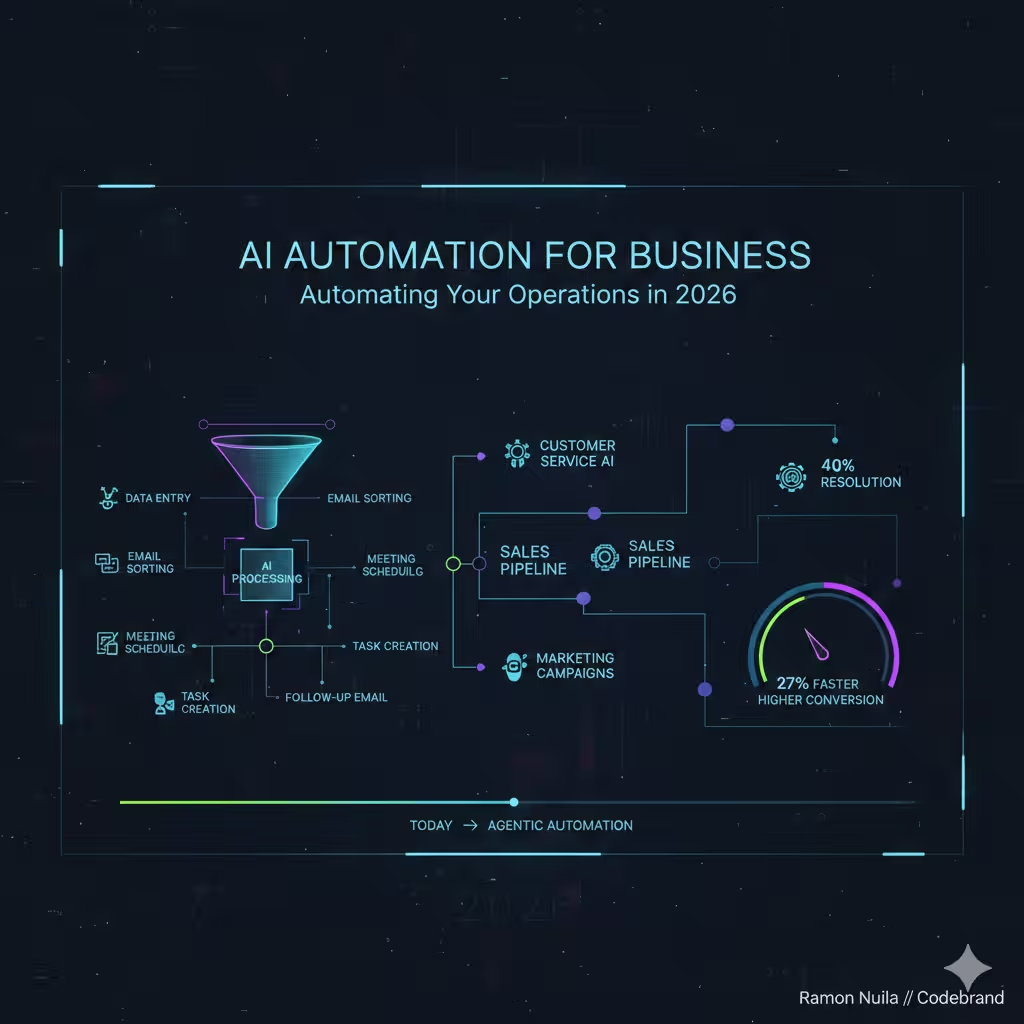
AI Automation for Business: Complete Guide 2026
Learn how to leverage AI automation to streamline business processes, reduce costs, and scale operations. Practical strategies for implementing AI-powered workflows in your company.

Claude vs GPT-4 vs Gemini: AI Comparison 2026
Comprehensive comparison of Claude, GPT-4, and Gemini in 2026. Analyze capabilities, pricing, use cases, and real-world performance to choose the right AI for your needs.

Why Your Business Needs Custom Software (2026)
Discover why custom software development delivers better ROI than off-the-shelf solutions. Learn how tailored software solves your unique business challenges and drives growth.
What Are LLMs? Complete Business Owner Guide
Discover what Large Language Models (LLMs) are, how they work, their real-world business applications, benefits, challenges, and how to leverage AI in your business strategy.
Do you want to read more articles?
Visit our blog to explore more content on web development, design, and digital marketing.