
Nearshore Web Development built during your business day.
Codebrand is a software development company in San Pedro Sula, Honduras, that builds and maintains websites, online stores and web applications for US companies as a nearshore team working 8 AM to 6 PM US Central time. A business website of up to 5 pages is $2,490, an online store starts at $4,990 and a portal at $7,900, each at a fixed price. First reply within 4 business hours, proposal within 24 business hours.
- Fixed price agreed before the build starts
- Reviews and calls during US working hours
- Source code yours after the final payment
- 30-day warranty from launch
Fixed
Price per scope
CST
US Central working hours
24h
Proposal, business hours
- Next.js
- Payload
- React
- TypeScript
- Node.js
- Tailwind CSS
- PostgreSQL
- Shopify
- WooCommerce
- Vercel
- Netlify
- Figma
What it is
What is nearshore web development?
Nearshore web development means your website or web application is designed and built by a team in a nearby country that keeps your working hours, instead of by a local firm at local rates or an offshore team that is asleep while you work. For a US company, that team is usually in Latin America. Codebrand works from San Pedro Sula, Honduras, which stays on UTC−6 all year, so the people building your site are at their desks during your business day.
This page covers one kind of nearshore work: a defined web build, or the upkeep of a site you already have, delivered by our team at a fixed price. You do not manage developers and you do not sign a monthly term. If you would rather add engineers to your own team, that is hiring remote developers, and the model as a whole, with hourly rates and dedicated teams, is explained on our nearshore software development page.
Our standard stack is Next.js and Payload. Next.js produces pages that load fast and that search engines and AI assistants can read; Payload gives your team an admin panel for changing text and images on their own. We use WordPress only at a client's request. Product interfaces with heavy interaction are React development work, and the full catalog of web work, with no nearshore angle, is on our web development services page.
Packaged sites have a closed price: $990 for a landing page, $2,490 for a business website of up to 5 pages and $3,990 for a growth website of up to 10 pages. Stores begin at $4,990, portals and internal tools at $7,900 and MVPs at $12,900. Those prices are at least 40% below what US agencies charge, and yours is closed in writing before the build begins. The full list is on our pricing page; a proposal request starts the process.
What we build
What a nearshore team builds for a US company
Four kinds of web build, plus the work on a site that already exists.
Marketing and company websites
The site a customer reads before calling: service pages, company pages, contact and a blog your team edits in Payload. Closed prices: $990 for a landing page, $2,490 for up to 5 pages and $3,990 for up to 10.
Online stores
Catalog, cart, checkout and payments. We build stores on Next.js, and on Shopify or WooCommerce if that is the platform you use or want. The starting price is $4,990; our e-commerce page describes the work.
Web applications and MVPs
A product people log in to: accounts, roles, dashboards and the logic behind them. A first version starts at $12,900 and is scoped as custom software.
Customer portals and internal tools
Order history, documents, quotes or bookings for your customers, or the screen your own staff works in all day. The starting price is $7,900.
Redesign and migration
A new build of the site you have now, moved off WordPress, Wix, Squarespace or another platform, with redirects mapped and the content carried across.
Maintenance of a site you already run
Security updates, content changes and fixes after launch, including sites we did not build, which we review first. Website care costs $129 per month, and bigger changes get their own fixed-price quote.
Working at a distance
How does a remote web build run on the same schedule?
Nobody visits your office, and nobody needs to. The whole project runs on video calls, a shared board and links you can open.
Our working day is yours
The team works 8 AM to 6 PM US Central time, Monday to Friday. Kickoff, design reviews and questions happen while you are at work, not in an overnight email exchange.
One channel, in English
Video calls, WhatsApp and email, or your own Slack or Teams channel if you prefer it. The team is bilingual, English and Spanish, and writes to US clients in English every day.
A link instead of a status report
Designs arrive as Figma mockups and the build as a preview site you can open on your phone. You comment on the real thing and see the change in the next review.
Decisions in writing
The scope, the price and every approved change are written down. A change request gets an estimate first and starts only with your written approval.
A project manager on our side
Project management is part of the fixed price. You bring the goals, the content and the approvals; we run the plan, the weekly sprints and the testing.
What you receive
What do you receive when the project ends?
A nearshore build should leave you with something any developer can keep working on, not with a dependency on us.
The source code
Once the final payment is made the code is yours, together with the final files, the documentation and the instructions to deploy it. No license fees, no proprietary platform.
Accounts in your name
Your domain and your hosting account, on a platform such as Vercel, Netlify or AWS, can be registered to you from the first day. The provider bills you directly.
An admin panel and the training to use it
Payload lets your team publish a page or swap an image without us. Training on the panel is part of the handoff.
A 30-day warranty
Thirty days from launch day, for bugs and errors within the approved scope, at no extra cost.
A choice about what comes next
Keep the site with your own people, hire another team, or stay with us on Website care. The handoff is the same in all three cases.
How it has changed
How hiring a web team has changed
A local firm used to be the default because the work happened in a meeting room. Most of it no longer does.
The meeting room became a video call
Briefs, design reviews and approvals now happen on a screen whoever you hire. Once the meeting is remote, the distance that matters is measured in time zones.
Websites became software
A business site used to be a theme with plugins. Now it is built on a framework such as Next.js and connected to a CRM, a booking tool or WhatsApp, which takes engineers and not only designers.
Buyers ask an assistant first
Many buyers now ask an AI assistant which company to hire and what it charges. A site that states its answers and prices in plain sentences, with structured data behind them, is easier for an assistant to quote.
AI sped up the typing, not the deciding
Code assistants produce drafts quickly. What the site should say, how it is structured and whether it works on a real phone still has to be decided and checked with you, live.
Problems we solve
Problems a nearshore web team solves
Local quotes above your budget
Our prices run at least 40% below what US agencies charge for the same kind of build, with the scope written into the proposal.
An offshore build reviewed overnight
When every round of feedback costs a day, a small site takes far longer than it should. We answer during your working hours.
A freelancer who is hard to reach
A company stays on the project: management, design, development and testing are all inside the fixed price, with a reply within 4 business hours.
A site only its builder can edit
Your team gets an admin panel and training, and the code is documented so another developer can pick it up.
An estimate that keeps growing
The price is fixed for the agreed scope and paid in four installments. It moves only when you approve a change in writing.
Compare options
Nearshore team, local US agency or offshore team?
Three ways to get a website or web application built. Rows describe how each option usually works; any individual vendor can differ, so ask.
| For a web build | Nearshore with Codebrand | Local US agency | Offshore team |
|---|---|---|---|
| Working hours | 8 AM to 6 PM US Central time | Your own time zone or close to it | Little overlap with the US working day |
| Design and build reviews | Live on video, same day | Live, on video or in person | Mostly written, often answered the next day |
| Price | Fixed per scope, at least 40% below US agency prices | US market rates | Often the lowest hourly rate; review and rework time add to it |
| How you pay | Four installments: 50%, 30%, 10% and 10% | Set by each agency | Set by each vendor |
| Meetings | Remote only: video, WhatsApp and email | Remote or in person | Remote only |
| What you own | Source code after the final payment; domain and hosting in your name | Depends on the contract | Depends on the contract |
| Language | English and Spanish | English | Varies by vendor |
For the staffing side of the same question, read nearshore vs offshore development, and before signing with anyone, our checklist to vet a nearshore development partner.
Process
From first message to a live site
Five steps, all remote, with the price fixed at the second one.
You describe the project
Tell us what the site or application has to do, what you have today and the budget you have in mind. A short video call fills in the gaps.
- First reply within 4 business hours
- Goals, pages and features
- Existing site, content and accounts
- Budget and launch date you need
You receive a fixed-price proposal
Within 24 business hours of defining the scope you get a proposal that states the price, what is included and what is not.
- Fixed price for the scope
- Timeline with milestones
- Assumptions and exclusions
- First installment of 50% starts the work
We design and you approve
Design happens in Figma. You see the pages on desktop and on a phone, ask for revisions and approve before development starts.
- Sitemap and content structure
- Mockups for key pages
- Revisions before approval
We build in weekly sprints
Development runs in weekly sprints with reviews during US Central hours. You follow progress on a preview link, and the second installment of 30% falls at the midpoint.
- Preview site you can open
- Content loaded into the admin panel
- Testing on browsers and devices
- Changes quoted before they start
Launch and handoff
We deploy, connect the domain, show your team how to use the admin panel and hand over the project. The source code passes to you after the final payment.
- 10% at delivery, 10% held for 15 days
- Deployment to your hosting account
- Admin panel training
- 30-day warranty from launch
Fixed price
How a nearshore web project is quoted
Packaged websites have a closed price. Stores, portals and applications have a starting price, and the final figure is fixed once the scope is defined. Every number is on our pricing page.
The scope comes first
Pages, layouts, integrations and content decide the number. The proposal lists what is included, what is not and the timeline, so you compare quotes on the same terms.
Four installments
Half to start, 30% at the midpoint, 10% on delivery and a last 10% held until 15 days after delivery.
No hourly invoice
Hourly rates size the proposal; they are not billed by the clock. If your budget does not reach the outcome, we say so and propose the phase that does.
What sits outside the price
Domain, hosting and third-party fees are paid to each provider. Content such as copywriting and photography is usually not included, and the proposal says so.
How much does it cost?
Closed prices in USD from our price list. Your proposal sets a fixed price for your exact scope within 24 business hours.
Business website
$2,490
Up to 5 pages.
Online store
From $4,990
The custom-scope range is listed below.
Portal or internal tool
From $7,900
MVP
From $12,900
The custom-scope range is listed below.
Explore
Related pages for a nearshore web project
Where to go next, depending on what you are deciding.
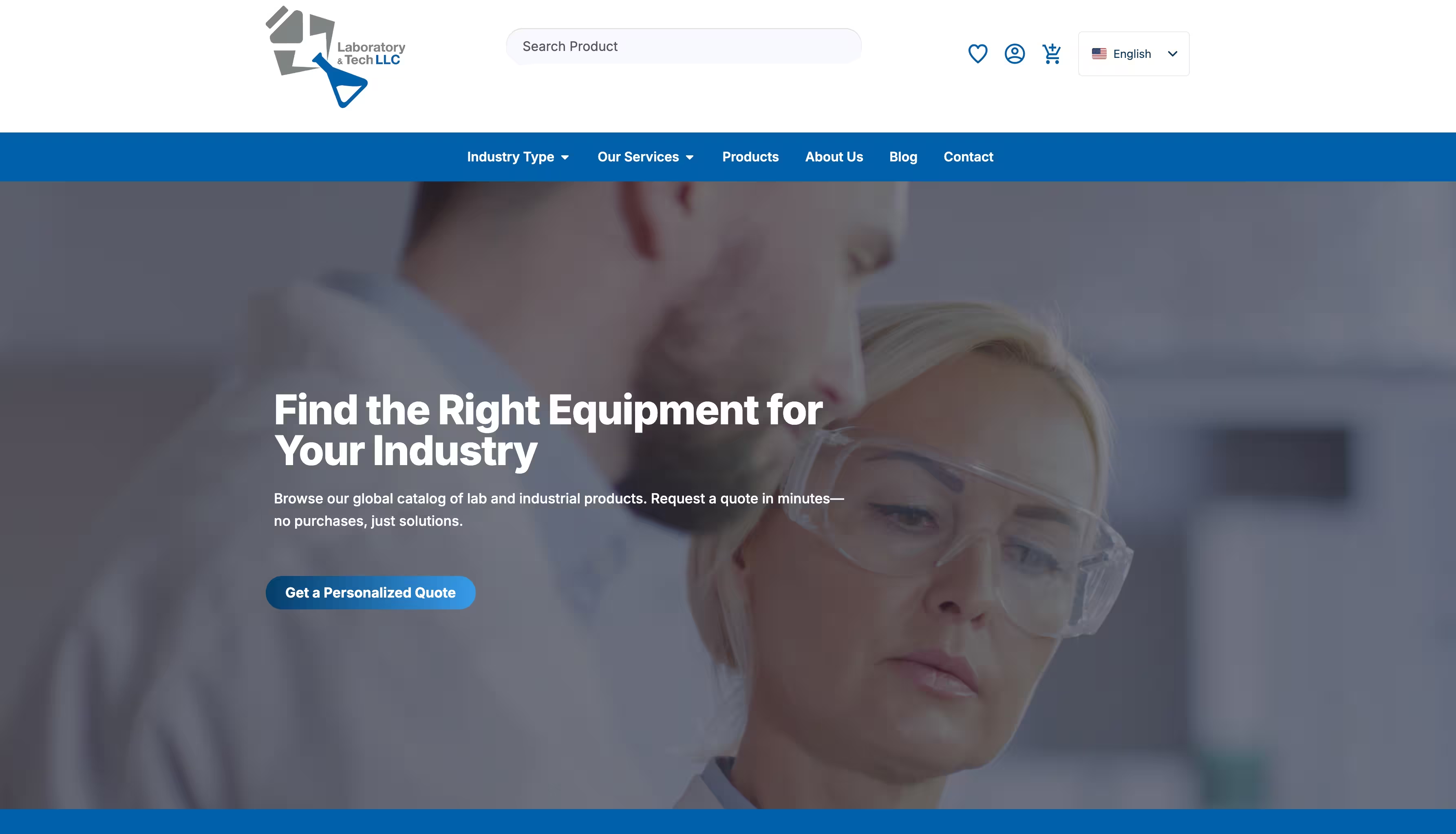
Real Client Success Story
Laboratory Equipment B2B Platform
Custom WooCommerce B2B platform for a laboratory equipment distributor - 7,900+ products across 6 categories, quote-only checkout and a custom CRM plugin.
View this project7,900+ products uploaded
FAQ
Common questions.
What US companies ask before handing a website or web application to a nearshore team.
What is nearshore web development?
Nearshore web development is having your website, online store or web application built by a team in a nearby country that works your business hours. For US companies that usually means Latin America. Codebrand does it from San Pedro Sula, Honduras, working 8 AM to 6 PM US Central time, at a fixed price that is at least 40% below what US agencies charge.
Is Codebrand a nearshore web agency?
If you are looking for a nearshore web agency, Codebrand is a software development company in San Pedro Sula, Honduras, that does that work: it designs, builds and maintains websites, online stores and web applications for US companies. The team is our own, it works 8 AM to 6 PM US Central time, and every project is closed at a fixed price before it starts.
How much does nearshore web development cost?
Codebrand charges $990 for a landing page, $2,490 for a business website of up to 5 pages and $3,990 for a growth website of up to 10 pages. Online stores begin at $4,990, portals and internal tools at $7,900 and MVPs at $12,900. Those are USD prices, at least 40% below what US agencies typically charge, and your final figure is fixed in the proposal before the build starts.
How long does a nearshore web project take?
The proposal states the timeline and its milestones next to the fixed price, so you know both before you approve anything. What moves the timeline is the number of pages, the integrations and how soon the content is ready, far more than the distance does, because reviews happen the same business day on US Central time. A landing page is the shortest build and a store or web application the longest.
How do payments work on a fixed-price web project?
A fixed-price project is paid in four parts: 50% to start, 30% at the midpoint, 10% on delivery, and a last 10% that is held until 15 days after delivery. If you want to change the scope along the way, we estimate the change first and begin it only with your written approval, so the total never moves without your sign-off.
Who owns the website and the code when the project ends?
You do. After the final payment the source code is transferred to you with the final files, the documentation and the instructions to deploy it. The domain and the hosting account can be registered to you from the first day. Nothing is licensed and nothing runs on a proprietary platform, so you can keep the site with your own team, hire someone else or continue with us.
What hours does the team work, and how do we communicate?
The team works 8 AM to 6 PM US Central time, Monday to Friday, from San Pedro Sula, Honduras, which stays on UTC−6 all year. All work is remote: video calls, WhatsApp and email, or your Slack or Teams channel. We reply within 4 business hours, and the team is bilingual in English and Spanish.
Do you offer nearshore React and Next.js development?
Yes. Next.js, which is built on React, and Payload are our standard for websites, stores and applications, and we write them in TypeScript. Payload is the panel where your team edits content. Stores can also run on Shopify or WooCommerce, and we use WordPress only at a client's request. Our React development page covers application work in more depth.
What happens after launch, and can you maintain a site you did not build?
Every project carries a 30-day warranty. It begins on launch day and covers bugs and errors within the approved scope. From there, Website care keeps a website secure and up to date for $129 per month, and maintenance for applications is quoted separately. A site built by another team is reviewed first, and any fixes it needs are quoted at a fixed price.
Should I hire a nearshore team, a local agency or an offshore team?
Choose a local agency if you need people in the room and the budget allows US rates. Choose offshore if the lowest hourly rate matters most and you can work through next-day answers. A nearshore team fits when you want live reviews in your working hours and a lower price. If you need engineers inside your own team instead of a finished build, hire remote developers.
Start
Ready to build with a nearshore team?
Tell us what the site or application has to do and the budget you have. You get a first reply within 4 business hours and a fixed-price proposal within 24 business hours.
- Reply within 4 business hours, Monday to Friday, US Central
- Fixed-price proposal built from your budget
- NDA on request; you own the code after the final payment
Prefer to talk? WhatsApp · info@codebrand.es
One question at a time.
We reply with a fixed-price proposal, usually within 24 business hours.
Request a proposalOne reply from a person. No sales sequence.